Introduction: The Business You Ignore—Until You Need It
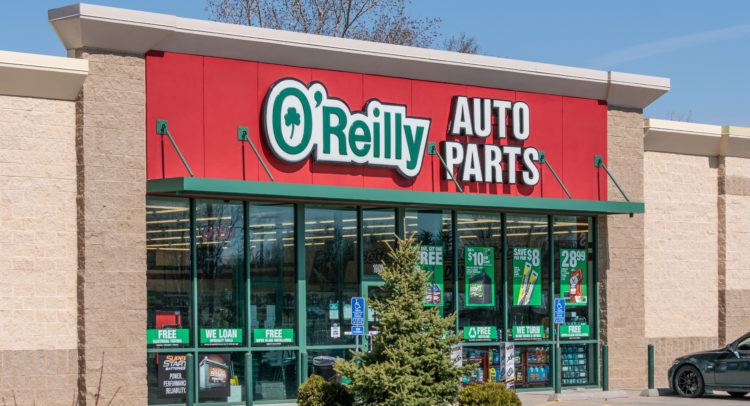
At first glance, O’Reilly Automotive looks like a simple retail chain selling brake pads and motor oil.
But under the surface, it operates one of the most efficient, high-return business models in U.S. retail.
In a market obsessed with AI, software, and disruption, O’Reilly represents something different:
a highly optimized, logistics-driven, necessity-based compounder that quietly generates consistent returns across economic cycles.
This is not just a retail story. It is a distribution, infrastructure, and macro resilience story.
O’Reilly Automotive Business Model: Distribution Disguised as Retail
O’Reilly is not primarily a storefront business—it is a localized distribution network.
The company operates through a hub-and-spoke model:
- Regional distribution centers
- Local hub stores with expanded inventory
- Satellite stores for rapid delivery
This structure allows O’Reilly to:
- Stock hundreds of thousands of SKUs
- Deliver parts to mechanics multiple times per day
- Maintain extremely high product availability
That last point is critical.
When a repair shop needs a part, they are not browsing—they are solving a problem immediately.
Speed matters more than price.
This transforms O’Reilly from a retailer into a mission-critical supplier.
DIFM vs DIY: The Hidden Profit Engine
O’Reilly serves two types of customers:
- DIY (Do-It-Yourself) consumers
- DIFM (Do-It-For-Me) professional mechanics
The DIFM segment is where the real power lies.
Professional customers:
- Order frequently (daily or multiple times per day)
- Value reliability over price
- Build operational dependency on suppliers
Once a repair shop integrates O’Reilly into its workflow, switching becomes costly in terms of time and risk.
This creates:
- Recurring revenue
- High customer retention
- Strong pricing power
In effect, O’Reilly becomes part of the operating infrastructure of small businesses across the U.S.
Why Margins Stay Strong (And Durable)
O’Reilly consistently delivers strong margins due to a combination of structural advantages:
- Private label products → higher margins than branded parts
- Scale purchasing power → better supplier terms
- High inventory turnover → efficient working capital
- Low obsolescence risk → auto parts don’t go out of style
This is fundamentally different from traditional retail.
There are no fashion cycles. No seasonal markdowns. No trend risk.
Instead, the business behaves more like industrial distribution with retail-level accessibility.
Macro Positioning: Why ORLY Thrives in Tough Economies
One of the most underappreciated aspects of O’Reilly’s model is its macro positioning.
When the economy weakens:
- Consumers delay buying new cars
- Vehicle ownership duration increases
- Repair and maintenance demand rises
The average age of vehicles in the U.S. continues to climb, now exceeding 12 years.
That directly benefits O’Reilly.
In other words, ORLY is:
- Less sensitive to discretionary spending
- Positioned to benefit from economic pressure
- A defensive compounder in disguise
The Logistics Moat: Why This Is Hard to Replicate
O’Reilly’s competitive advantage is not just scale—it is proximity + speed.
Its network enables:
- Same-day or intra-day delivery
- Deep inventory availability at the local level
- Consistent service reliability
Even large-scale e-commerce platforms struggle to compete here.
Urgent automotive repairs require:
- Immediate fulfillment
- Accurate parts matching
- Local availability
This creates a moat based on time sensitivity, not just price.
Capital Allocation: The Quiet Driver of Shareholder Returns
O’Reilly has paired its strong operating model with disciplined capital allocation:
- Significant share repurchases over time
- Consistent store expansion
- Focus on high return on invested capital (ROIC)
The result:
- Earnings per share growth outpacing revenue growth
- Long-term compounding for shareholders
This is not a flashy strategy—but it is extremely effective.
Competitive Landscape: Strong, But Not Unbeatable
O’Reilly operates in a competitive space alongside:
- AutoZone
- Advance Auto Parts
However, competition tends to revolve around:
- Local execution
- Delivery speed
- Inventory depth
Rather than purely price.
This keeps industry structure relatively rational and allows leading players like O’Reilly to maintain strong economics.
Key Risks to Watch
Even high-quality businesses face long-term risks:
- Electric vehicles (EVs) → fewer moving parts over time
- Labor constraints → shortage of skilled mechanics
- Execution risk → maintaining service levels at scale
That said, the EV transition is gradual, and the internal combustion vehicle base will remain dominant for years.
O’Reilly’s model is adaptable—it can shift inventory as the vehicle mix evolves.
The Bigger Picture: A High-Quality, Underappreciated Compounder
O’Reilly Automotive represents a rare combination:
- Recurring, necessity-driven demand
- Strong margins and capital efficiency
- Defensive macro positioning
- Durable competitive advantages
It is not exciting.
It is not disruptive.
But it is consistently effective.
And in markets dominated by narrative-driven investing, that can be a powerful edge.
Lake Region State College — Sponsored Insight
This article is brought to you in part by Lake Region State College, supporting practical, real-world financial education.
Whether you’re studying business, aviation, or technical trades, understanding how companies like O’Reilly Automotive operate in real economic environments is critical.
Lake Region emphasizes applied learning, career readiness, and financial literacy—skills that translate directly into industries shaping today’s economy.
Disclaimer
This article is for informational and educational purposes only and does not constitute investment advice.
Investing involves risk, including the potential loss of principal. Readers should conduct their own research and consult with a qualified financial advisor before making any investment decisions.

Michael Lazenby is the Editor-in-Chief and Founding Partner of MacroHint. He studied economics, business, and government at UT Austin and has hedge fund experience.