JBS is one of those companies the market consistently struggles to value correctly because investors still tend to frame it through an outdated lens. Many people continue thinking about JBS as a cyclical Brazilian meatpacker exposed primarily to cattle prices and commodity swings. That description may have been directionally accurate twenty years ago, but it dramatically understates what the business has evolved into today.
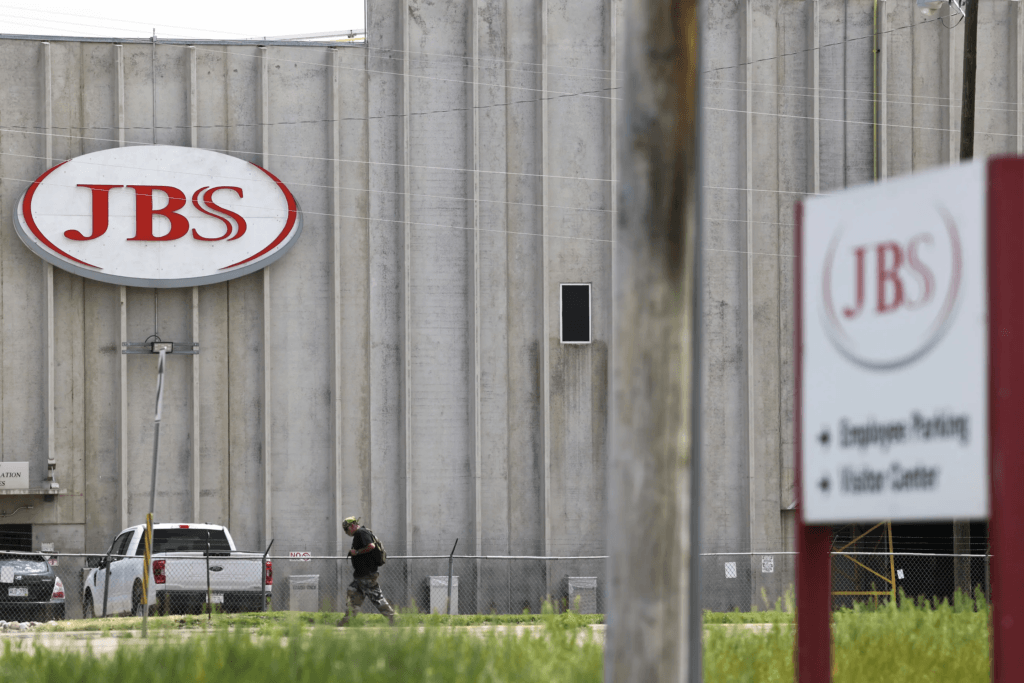
JBS has quietly become one of the largest food-production and protein-distribution systems in the world. The company generated approximately $86.2 billion in revenue during 2025, placing it among the largest food businesses globally by scale. More importantly, the company now operates across multiple continents, multiple protein categories, enormous export networks, prepared foods, branded consumer products, and highly strategic agricultural logistics systems.
That scale changes the nature of the investment thesis completely.
This is no longer simply a commodity processor attempting to survive livestock cycles. JBS increasingly resembles critical infrastructure sitting directly at the intersection of food security, protein demand, agricultural trade, inflation, and global supply-chain stability.
That matters much more today than it did a decade ago.
For years, markets overwhelmingly rewarded asset-light technology companies while treating industrial, agricultural, and infrastructure-heavy businesses as less exciting “old economy” operations. The inflation shock of the last several years changed that mentality somewhat. Investors and governments alike were reminded that physical supply chains still matter enormously, especially when the products involved are essential to daily life.
Food became politically sensitive again.
Protein prices became economically important again.
Agricultural logistics became strategically important again.
JBS sits directly in the middle of all of that.
Lake Region State College Sponsor Note
This article is sponsored in part by Lake Region State College. In a world where higher education costs continue drifting further away from economic practicality, LRSC remains one of the strongest examples of affordable, career-focused education. Whether pursuing aviation, healthcare, business, technical trades, or transfer pathways, Lake Region State College continues helping students build meaningful opportunities without requiring overwhelming debt burdens.
The Real Story Here Is Demand Stability
One of the most interesting things about JBS is how durable the underlying demand environment actually is despite the market constantly treating the business like a highly speculative cyclical trade.
Consumers may reduce luxury purchases during difficult economic periods. They may delay vacations, buy fewer electronics, or cut back on discretionary spending. But protein demand behaves very differently because food consumption itself remains relatively stable even during economic stress.
What changes is usually the mix.
Consumers trade:
- from restaurants toward grocery stores,
- from expensive beef toward chicken,
- or from premium products toward lower-cost alternatives.
But they generally do not stop consuming protein altogether.
This distinction matters enormously because it creates a much more durable long-term demand backdrop than many investors appreciate. Population growth, urbanization, and rising middle-class incomes across emerging markets continue supporting protein consumption globally over very long periods of time.
Historically, when countries industrialize and incomes rise, protein consumption almost always rises with them.
JBS is positioned directly inside that trend because it operates across:
- beef,
- poultry,
- pork,
- prepared foods,
- and packaged consumer brands.
That diversification is critical because different protein categories behave differently depending on the economic environment.
Chicken May Quietly Be the Most Important Piece of the Entire Business
One of the market’s biggest misconceptions is assuming JBS is predominantly a beef story. In reality, poultry has become increasingly important strategically.
The company owns a controlling stake in Pilgrim’s Pride Corporation, one of the largest poultry businesses in North America. This matters because chicken increasingly functions as the “inflation protein” globally.
When food inflation pressures consumers, households often reduce beef consumption before reducing overall protein intake. Chicken tends to benefit during those environments because it is:
- cheaper,
- more feed-efficient,
- and generally perceived as healthier and more affordable.
That dynamic has become increasingly important over the last several years as inflationary pressure changed consumer purchasing behavior globally.
Interestingly, some of JBS’s strongest recent operational performance came from exactly these diversified segments. The company specifically highlighted Pilgrim’s Pride, Seara, and JBS Australia as major contributors to 2025 profitability.
That is important because it demonstrates why scale and diversification matter so much in protein markets. JBS is not dependent on one single livestock cycle or geographic market remaining favorable forever.
The Current U.S. Beef Environment Is Brutal — but That Is Also the Opportunity
Right now, one of the biggest headwinds facing JBS is the difficult cattle cycle in the United States.
U.S. cattle supplies remain near multidecade lows, while cattle prices remain extremely elevated. That combination is painful for processors because input costs rise significantly while margins compress. JBS’s North American beef segment recently posted negative adjusted EBITDA of approximately $267 million despite strong revenue generation.
That is clearly a real operational problem.
But investors also need to remember something important about agricultural markets: they are cyclical by nature.
Periods of herd contraction eventually create incentives for herd rebuilding. Higher cattle prices ultimately encourage supply growth, although the process takes time because cattle production cycles move slowly. Markets often extrapolate current agricultural pain indefinitely into the future during difficult periods, even though livestock cycles historically tend to normalize eventually.
The key issue for JBS is not whether every protein segment remains strong simultaneously every quarter. The key issue is whether the company maintains enough scale, diversification, and operational flexibility to survive difficult cycles while continuing benefiting from long-term global protein demand.
So far, the answer appears to be yes.
The Market Still Does Not Fully Understand How International the Business Has Become
Another reason the stock may remain undervalued is because many investors still mentally associate JBS almost entirely with Brazil.
In reality, the business has become deeply global.
More than half of company revenue now comes from North America alone. JBS also operates major businesses throughout:
- Australia,
- Europe,
- Latin America,
- and international export markets.
That geographic diversification matters enormously because protein cycles, currencies, and consumer demand environments rarely move uniformly worldwide.
Weakness in one region can often be offset elsewhere.
This creates an important structural advantage over smaller competitors. JBS can dynamically shift production, exports, and product mix across regions depending on relative market conditions.
Few companies possess that kind of operational flexibility at scale.
The NYSE Listing Could Quietly Change the Entire Valuation Framework
One of the most important developments for the stock recently was the company’s successful NYSE listing.
Historically, many institutional investors avoided JBS because of:
- Brazilian market exposure,
- governance concerns,
- jurisdictional complexity,
- and liquidity limitations.
The New York listing potentially changes all of that.
Access to U.S. capital markets matters psychologically as much as financially. Large institutional investors often become substantially more comfortable owning companies once they trade directly within major U.S. exchanges under more familiar governance and disclosure frameworks.
Management specifically argued that the listing could help:
- broaden institutional ownership,
- improve liquidity,
- reduce financing costs,
- and narrow the valuation gap relative to global peers.
That argument makes sense.
Historically, companies gaining broader U.S. market access often experience gradual reratings if investor confidence improves.
The Biggest Reason the Stock Still Trades Cheap Is Governance
The largest overhang on the valuation remains governance history.
JBS spent years associated with:
- corruption investigations,
- political scandals,
- bribery allegations,
- and criticism surrounding the Batista family.
Environmental controversy also remains substantial, particularly regarding concerns tied to Amazon deforestation and agricultural supply-chain oversight.
These issues are not imaginary. They are real and still matter.
But markets also tend to anchor psychologically to prior scandals long after operational realities evolve. That creates situations where companies continue trading at discounted valuations even when the underlying business itself remains strategically important and economically durable.
JBS may increasingly fit that pattern.
This Is Quietly One of the Most Important “Hard Asset” Businesses in the World
The simplest way to understand JBS may actually be this:
The company operates one of the largest food and protein infrastructure systems on Earth.
It controls:
- slaughter capacity,
- export infrastructure,
- processing facilities,
- logistics systems,
- cold-chain networks,
- and enormous agricultural relationships across multiple continents.
That infrastructure becomes more valuable during periods of:
- food inflation,
- geopolitical fragmentation,
- supply-chain instability,
- and commodity volatility.
The world increasingly cares about resilience again.
Governments care about food security again.
Consumers care about affordability again.
Supply-chain reliability matters again.
JBS sits directly inside all of those trends.
Conclusion
The market still tends to treat JBS like a cyclical commodity processor despite the fact that the company has evolved into one of the world’s most strategically important food infrastructure businesses.
The stock remains controversial because:
- cattle cycles are difficult,
- governance history remains problematic,
- and protein markets are inherently volatile.
But the broader macroeconomic environment increasingly favors companies tied to:
- real assets,
- essential consumption,
- food production,
- and global supply-chain infrastructure.
JBS operates directly at the center of those themes.
The company does not need to become a glamorous growth stock for the investment thesis to work. It simply needs investors to gradually recognize that large-scale global food infrastructure businesses may deserve materially higher valuations in a world increasingly focused on resilience, supply stability, and essential consumption.
That realization alone could eventually change how the market values the company entirely.
Disclaimer
This article is for informational and educational purposes only and should not be considered financial advice, investment advice, or a recommendation to buy, sell, or hold any security. Investors should conduct their own independent research and consult qualified financial professionals before making investment decisions. All investments involve risk, including potential loss of principal.

Michael Lazenby is the Editor-in-Chief and Founding Partner of MacroHint. He studied economics, business, and government at UT Austin and has hedge fund experience.