Every Great Investment Story Eventually Becomes a Consensus Trade
The most dangerous moment for an investment theme is rarely when nobody believes it.
The most dangerous moment is when everybody does.
Over the past several years, semiconductors have become the beating heart of the stock market. Artificial intelligence transformed from a niche technological concept into the dominant investment narrative on Earth. Companies building AI models needed computing power. Computing power required GPUs. GPUs required advanced semiconductors. Advanced semiconductors required increasingly sophisticated manufacturing equipment, memory solutions, networking infrastructure, and supply chains.
Virtually every road in modern investing eventually led back to chips.
The story was compelling because it was true.
Artificial intelligence genuinely represents one of the most important technological developments of the modern era. Data center spending genuinely exploded. Hyperscalers genuinely increased capital expenditures at extraordinary rates. Demand for advanced computing power genuinely surged. Semiconductor companies produced exceptional financial results that justified much of their share price appreciation.
The problem is not that the AI story is false.
The problem is that investors have gradually stopped asking what is already reflected in prices.
Markets do not reward investors for identifying great businesses. Markets reward investors for identifying outcomes that differ from expectations.
Today, expectations surrounding semiconductors have become extraordinarily optimistic.
Many investors now speak about AI infrastructure spending as though it will continue rising indefinitely. Data center investment is frequently discussed as if it were immune to economic cycles. Semiconductor demand is often treated as though it exists outside the normal laws of business investment.
History suggests otherwise.
Every major capital spending cycle eventually encounters limits.
Not because the underlying technology is unimportant.
Because customers eventually ask whether they are generating acceptable returns on their investments.
The AI boom has been fueled by some of the largest capital expenditures ever undertaken by private companies. Hyperscalers have collectively committed hundreds of billions of dollars toward data centers, networking equipment, GPUs, storage systems, power infrastructure, cooling systems, and related technologies.
Investors have largely focused on the spending itself.
The next phase of the story may focus on returns.
That distinction matters enormously.
As long as capital expenditures continue accelerating, semiconductor demand remains extraordinarily strong. Once executives begin asking harder questions about utilization rates, monetization, profitability, and return on invested capital, the conversation changes.
The market currently behaves as though AI spending can only move in one direction.
History suggests that assumption deserves scrutiny.
The Macro Environment Is Becoming Less Friendly Than Investors Realize
One of the defining characteristics of the post-pandemic bull market has been the willingness of investors to pay increasingly higher multiples for future growth.
That environment was supported by a combination of factors.
Interest rates were extraordinarily low.
Liquidity was abundant.
Inflation appeared contained.
Economic growth remained resilient.
Investors became comfortable assigning substantial value to cash flows expected years into the future.
Today, the macroeconomic environment looks considerably different.
Inflation remains above the Federal Reserve’s long-term target. Economic growth continues, but at a slower pace. Consumers have become more selective. Businesses are increasingly focused on efficiency. Financial conditions remain significantly tighter than they were during much of the previous decade.
This matters because semiconductor stocks have increasingly become long-duration assets.
The sector’s valuation depends heavily on expectations surrounding future earnings growth. Investors are not simply paying for current profits. They are paying for years of anticipated expansion.
When expectations become sufficiently optimistic, even exceptional businesses can become vulnerable.
The issue is not whether semiconductor companies are generating strong results.
Many clearly are.
The issue is whether future results can continue exceeding already extraordinary expectations.
That becomes increasingly difficult as enthusiasm grows.
Consider the broader composition of the semiconductor industry. While AI receives the overwhelming majority of attention, semiconductors remain deeply cyclical products. Demand ultimately depends on business investment, consumer electronics, industrial production, automotive manufacturing, communications infrastructure, and enterprise spending.
These end markets do not operate independently of the economy.
If growth slows, spending slows.
If confidence weakens, capital expenditures become more selective.
If financial conditions remain restrictive, investment decisions face greater scrutiny.
The semiconductor industry has always experienced periods of boom and correction.
Investors often convince themselves that the current cycle is different.
History suggests those beliefs rarely age well.
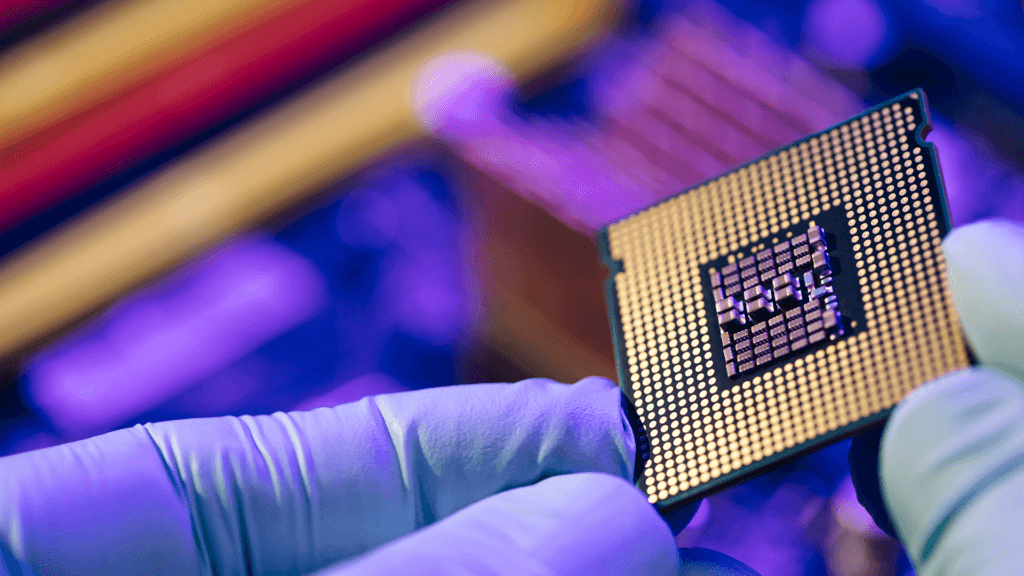
SOXX Is Increasingly Concentrated Around One Idea
The iShares Semiconductor ETF provides investors with broad exposure to the semiconductor ecosystem.
On the surface, diversification appears attractive.
In reality, much of the fund’s performance has become tied to a remarkably narrow set of assumptions.
Artificial intelligence spending continues accelerating.
Hyperscaler capital expenditures continue accelerating.
Demand for advanced computing continues accelerating.
Corporate investment continues accelerating.
Valuation multiples remain elevated.
Economic conditions remain supportive.
The challenge is not that these assumptions are impossible.
The challenge is that they have become widely accepted.
Markets rarely produce extraordinary returns from universally recognized opportunities.
By the time a theme becomes the dominant narrative on financial television, social media, earnings calls, institutional conferences, and retail investing forums simultaneously, much of the easy money has usually been made.
This is where the short thesis begins to emerge.
A short position does not require semiconductors to collapse.
It does not require artificial intelligence to fail.
It does not require technological progress to slow.
It simply requires reality to fall short of extraordinary expectations.
There is an important difference between a bad outcome and a less good outcome.
Many of the most painful corrections in market history occurred not because businesses deteriorated, but because expectations became impossible to satisfy.
Investors expecting perfection often react negatively to excellence.
That dynamic appears increasingly relevant within semiconductors.
The market has spent years rewarding every sign of AI-related demand. Companies connected to the theme have experienced enormous multiple expansion. Capital continues flowing into the sector. Analysts continue raising long-term forecasts. Institutional investors remain heavily positioned around the same narrative.
Positioning itself can become a risk.
When too much capital crowds into a single theme, future buyers become increasingly difficult to find. Expectations become elevated. Valuations become elevated. Sentiment becomes elevated.
At that point, the burden shifts.
The story no longer needs to be good.
It needs to become even better.
That is a much harder challenge.
The Best Short Ideas Usually Attack Expectations, Not Businesses
One of the most common mistakes investors make when evaluating short opportunities is confusing a bearish view on a stock with a bearish view on a company.
The two are not the same.
Many great short opportunities involve excellent businesses.
The problem is not operational weakness.
The problem is excessive expectations.
SOXX may increasingly fit that description.
The companies inside the fund include some of the most important businesses in the global economy. They possess strong competitive positions, technological leadership, substantial intellectual property, and genuine long-term relevance.
None of that guarantees attractive future returns from current prices.
Investors frequently assume that identifying a great business automatically leads to investment success. History repeatedly demonstrates otherwise. Great businesses can become terrible investments when purchased at extreme valuations. Great industries can experience poor returns when optimism becomes excessive.
The semiconductor industry may be approaching that type of environment.
Artificial intelligence is real.
Demand is real.
Innovation is real.
The question is whether expectations have moved beyond reality.
The current macroeconomic backdrop suggests caution. Inflation remains elevated. Growth continues slowing. Capital spending eventually faces scrutiny. Valuations remain demanding. Positioning remains crowded. Sentiment remains optimistic.
None of these factors independently guarantee a decline.
Together, they create conditions where disappointment becomes increasingly expensive.
That is ultimately the essence of the SOXX short thesis.
Not that semiconductors are bad.
Not that artificial intelligence is a bubble.
Not that technology is doomed.
Rather, that one of the greatest investment stories of the decade may have become one of the most crowded.
And in markets, crowded trades often become dangerous long before investors realize it.
Sponsored by Lake Region State College
Lake Region State College offers affordable, career-focused education with nationally recognized programs in aviation, business, healthcare, technology, and workforce development. Whether students are pursuing a four-year degree pathway, professional certification, or hands-on career training, Lake Region State College provides practical education designed to prepare students for high-demand careers in today’s economy.
Disclaimer: This article is for informational and educational purposes only and should not be construed as investment advice, financial advice, legal advice, or a recommendation to buy or sell any security. The opinions expressed are solely those of the author and are based on publicly available information believed to be reliable at the time of writing. Investing involves risk, including the potential loss of principal. Readers should conduct their own independent research and consult a qualified financial advisor before making investment decisions.

Michael Lazenby is the Editor-in-Chief and Founding Partner of MacroHint. He studied economics, business, and government at UT Austin and has hedge fund experience.