Sponsored by Lake Region State College
This article is proudly sponsored by Lake Region State College.
Lake Region State College provides students with affordable, career-focused education designed to create real-world opportunities. Through academic programs, workforce training, and transfer pathways, LRSC helps students develop the skills needed for the next stage of their professional journey.
The Technology Billionaire Who Owns the Old Economy
If someone were asked to guess what Bill Gates owns, the answer would probably include artificial intelligence companies, semiconductor manufacturers, cloud platforms, and the newest companies trying to disrupt the future.
That assumption would be understandable.
Gates created one of the greatest technology companies in history by correctly identifying that computers would become a central part of everyday life.
However, the portfolio connected to Gates tells a very different story.
Instead of concentrating on companies trying to replace the old economy, many of his largest disclosed holdings are companies quietly running the existing economy.
Trash collection.
Railroads.
Farm equipment.
Industrial machinery.
Cleaning systems.
Retail distribution.
The interesting question is not why Gates does not own more technology.
The better question is why someone who understands disruption better than almost anyone would intentionally choose businesses that are so difficult to disrupt.
Berkshire Hathaway: Buying an Entire Economic System
The largest position is Berkshire Hathaway, and it might be the clearest explanation of Gates’ investment philosophy.
Berkshire is not really a single company. It is closer to owning a miniature version of the American economy.
Through Berkshire, an investor gets exposure to insurance, energy, railroads, manufacturing, consumer products, and a massive collection of public equities.
The insurance business is especially important because of something Warren Buffett has discussed for decades: float.
Insurance companies collect premiums before they eventually pay claims. That money can be invested for years, creating a unique source of capital.
Gates’ attraction to Berkshire likely comes from the same reason Buffett built it: durability.
The company is not dependent on one technology cycle, one consumer trend, or one product.
It is designed to survive.
For someone who already created extraordinary wealth through disruption, Berkshire represents almost the opposite idea — a business built to endure disruption.
Waste Management: The Beauty of an Industry Nobody Wants to Enter
Waste Management might be the perfect example of a boring business hiding an incredible competitive advantage.
Garbage collection does not sound innovative.
That is exactly the point.
No matter what happens with artificial intelligence, smartphones, interest rates, or consumer trends, people continue producing waste.
The real power of Waste Management is not just picking up trash. It is owning the infrastructure behind waste disposal.
Landfills are incredibly valuable because creating new ones is extremely difficult. Communities generally do not want new landfills nearby, environmental regulations are strict, and permitting can take years.
This creates a strange economic situation.
Everyone needs the service.
Almost nobody wants new competitors entering the industry.
Existing landfill owners therefore control scarce assets.
A software company might lose customers overnight to a better competitor.
A landfill cannot be recreated by two programmers in a garage.
That is exactly the type of durability long-term investors search for.
Waste Connections: The Same Theme With a Different Strategy
The ownership of Waste Connections reinforces the same idea.
The company operates in the same essential industry but has historically focused heavily on secondary and exclusive markets.
That matters because competition tends to be lower.
In many local waste markets, routes, permits, relationships, and infrastructure create significant barriers.
The business becomes less about technological innovation and more about operational density.
The more customers a waste company serves in a region, the more efficient each route becomes.
Every additional stop increases profitability.
It is not glamorous.
It is a compounding machine built one trash route at a time.
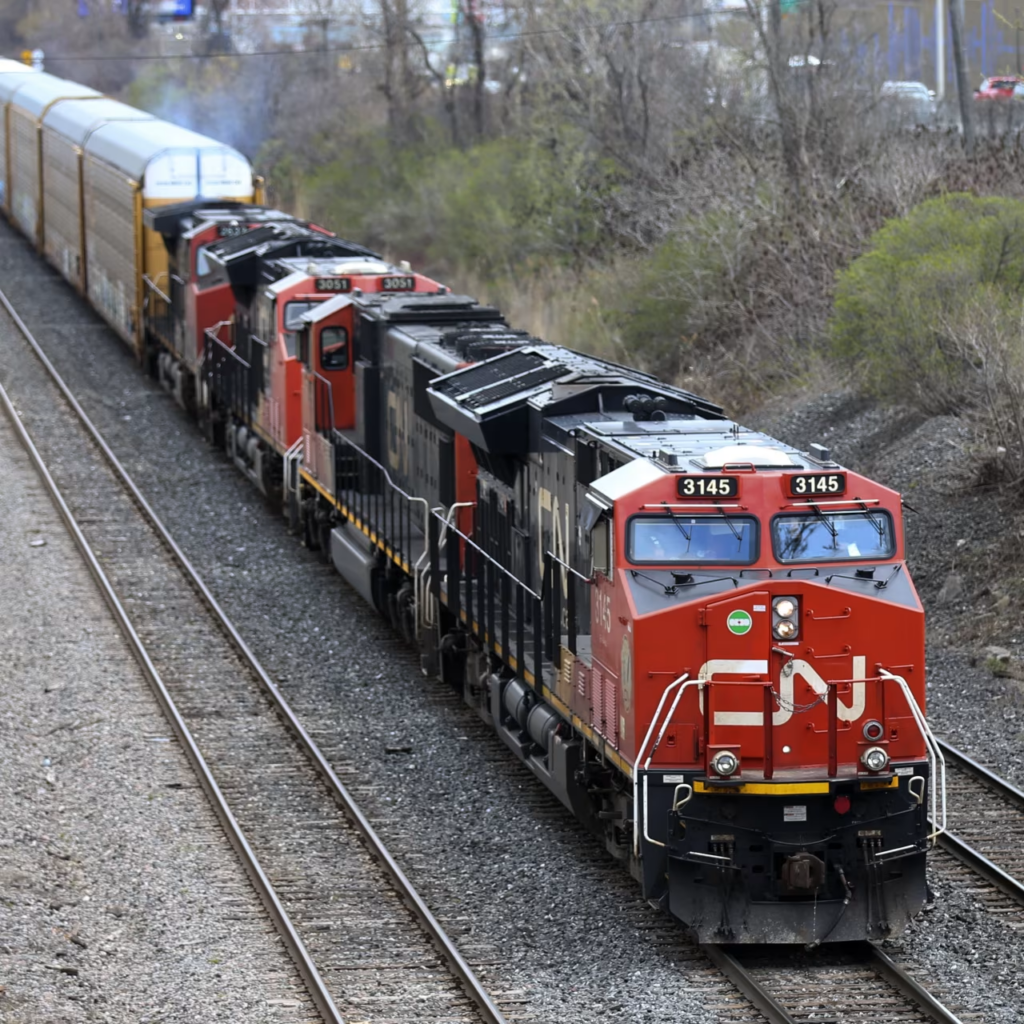
Canadian National Railway: Owning Something Almost Impossible to Rebuild
Canadian National Railway follows another classic investment principle: own assets that competitors cannot easily copy.
The railroad business has one of the most obvious moats in the world.
A new competitor cannot simply decide to build another North American rail network.
The land requirements, regulations, environmental approvals, and capital costs make that practically impossible.
The infrastructure already exists.
That gives established railroads enormous strategic value.
Canadian National connects ports, factories, farms, and consumers across thousands of miles.
The products being transported may change over time, but the need to move goods does not.
Technology changes what people buy.
Railroads help move whatever people buy.
Caterpillar: Selling the Tools Needed to Build the World
Caterpillar is a very different business because it is much more economically cyclical.
Demand for construction equipment, mining machinery, and industrial engines rises and falls with global economic activity.
However, Gates’ ownership likely reflects a longer-term view.
The world constantly needs infrastructure.
Roads need to be built.
Mines need equipment.
Energy projects require machinery.
Developing economies need construction.
Caterpillar benefits from being one of the few global brands trusted for extremely expensive, mission-critical equipment.
Customers buying a massive mining truck or excavator care about reliability, service networks, replacement parts, and decades of expertise.
The moat is not just the machine.
It is the entire ecosystem behind the machine.
Deere: Technology Hidden Inside Agriculture
Deere is often viewed as a simple tractor company, but modern agriculture is far more complicated.
Farmers are constantly trying to produce more food using fewer resources.
That has turned Deere into a combination of equipment, software, automation, and data analytics.
Modern Deere machines use GPS, sensors, and precision agriculture technology to improve efficiency.
This makes Deere especially interesting because it combines an old-world necessity with modern technology.
The world needs more food production.
Farmers need productivity.
Deere provides the tools.
Unlike many consumer trends, agriculture demand is connected to population growth and basic human needs.
Ecolab: The Company Behind Companies
Ecolab is probably the least recognized major holding, but it perfectly fits the theme.
Most consumers rarely think about sanitation systems, water treatment, or industrial cleaning.
Businesses think about them constantly.
Restaurants, hospitals, hotels, factories, and food producers need these systems every day.
The value of Ecolab comes from being deeply integrated into customer operations.
Once a company relies on Ecolab for critical processes, switching providers is not as simple as changing brands.
The service is embedded.
That creates recurring relationships and predictable demand.
It is another example of owning the invisible infrastructure behind everyday life.
Walmart: The Power of Scale
Walmart is one of the clearest examples of a company whose advantage comes from size.
Retail is brutally competitive.
Most retailers eventually struggle because consumers are price-sensitive and competitors constantly emerge.
Walmart’s advantage is that its scale becomes extremely difficult to challenge.
The company’s purchasing power, distribution network, and logistics operations allow it to compete aggressively on price.
This becomes especially valuable during periods of economic pressure.
When inflation rises or consumers become cautious, affordability matters more.
Walmart is built for that environment.
FedEx: The Physical Backbone of Digital Commerce
FedEx represents another interesting idea.
The internet changed shopping.
It did not eliminate transportation.
Actually, e-commerce made logistics even more important.
Every online order eventually becomes a physical delivery problem.
Warehouses, aircraft, trucks, sorting centers, and logistics networks become the bridge between the digital and physical economy.
FedEx owns part of that bridge.
The company may face competition, but recreating a global logistics network requires enormous investment and decades of development.
The Bigger Lesson From Gates’ Portfolio
The pattern is difficult to ignore.
These businesses are not necessarily the fastest growing.
They are not usually the most exciting.
They are not built around predicting the next trend.
Instead, they focus on things that remain necessary regardless of trends.
People create waste.
Goods move.
Food grows.
Cities expand.
Businesses need sanitation.
Consumers seek value.
After building wealth through one of history’s greatest technological disruptions, Gates appears to preserve wealth by owning companies designed to survive disruption.
Sometimes the most powerful businesses are not the ones promising to change the future.
They are the ones the future still depends on.
Disclaimer
This article is for informational and educational purposes only and should not be considered financial advice, investment advice, or a recommendation to buy or sell any security. Investors should conduct their own research, consider their own financial circumstances, and consult a qualified financial professional before making investment decisions.

Michael Lazenby is the Editor-in-Chief and Founding Partner of MacroHint. He studied economics, business, and government at UT Austin and has hedge fund experience.