Cintas Corp CTAS sits at the intersection of labor scarcity, regulatory complexity, and late-cycle demand for outsourced business services.
Cintas Corp CTAS: Outsourced Services Macro Outlook
Sponsored by Lake Region – Learn more at https://www.lrsc.edu
Executive Summary: A Late-Cycle Services and Compliance Thesis
Cintas Corp (CTAS) occupies a quietly powerful position in the U.S. economy as macro conditions evolve heading into 2026. In an environment defined by slowing growth, persistent labor constraints, elevated regulatory complexity, and cost-conscious corporate behavior, businesses increasingly favor outsourced, standardized, and compliance-oriented services. From a macroeconomic standpoint, Cintas aligns with this shift toward operational efficiency and risk minimization.
This is not a cyclical growth story tied to consumer spending booms. It is a macro-consistent services thesis rooted in labor scarcity, regulation, and the steady formalization of the U.S. workforce.
Labor Scarcity Is Structural, Not Temporary
One of the most durable macro trends in the U.S. economy is labor scarcity. Demographic aging, reduced labor force participation, and skills mismatches have created a persistent shortage across service, industrial, and logistics sectors. Even in periods of slower economic growth, companies struggle to staff and manage non-core operational functions efficiently.
From a macro perspective, this incentivizes outsourcing. Uniform rental, facility services, safety programs, and compliance management are increasingly handled by specialized providers rather than in-house teams. Cintas Corp CTAS benefits directly from this structural shift, as businesses prioritize reliability and predictability over internal complexity.
Why Cintas Corp CTAS Fits a Late-Cycle Economy
Late-cycle economic environments tend to reward businesses tied to operational necessity rather than discretionary expansion. As corporate budgets tighten, companies delay capital projects but continue spending on services that ensure continuity, safety, and regulatory compliance.
Uniform programs, hygiene services, and workplace safety infrastructure fall into this category. These are not optional line items. From a macro standpoint, Cintas Corp CTAS is positioned as a recurring-services provider whose offerings remain relevant regardless of short-term economic volatility.
This dynamic gives the business defensive characteristics without relying on consumer demand.
Regulatory Complexity Favors Scale and Standardization
Regulatory requirements around workplace safety, hygiene, and labor compliance have grown more complex over time. Smaller firms often lack the scale or expertise to manage these requirements efficiently on their own.
At a macro level, increased regulation acts as a tailwind for large, standardized service providers. Companies prefer turnkey solutions that reduce compliance risk and administrative burden. Cintas Corp CTAS operates within this framework, benefiting from the secular trend toward outsourcing compliance-intensive functions.
As regulation rarely rolls back meaningfully, this tailwind is structural rather than cyclical.
Services Inflation and Pricing Power
While goods inflation can be volatile, services inflation has proven far more persistent. Wages, logistics, and compliance costs remain elevated, especially in labor-intensive industries. Businesses increasingly seek predictable pricing and long-term service contracts to manage this inflation.
From a macro perspective, recurring service models benefit in this environment. Cintas Corp CTAS participates in a segment of the economy where pricing adjustments can be passed through gradually as part of contract renewals, aligning revenue growth with broader services inflation.
This makes the business less sensitive to sudden demand shocks than many cyclical industrials.
Why Cintas Corp CTAS Aligns With Corporate Cost Discipline
Corporate America heading into 2026 is likely to emphasize cost discipline over aggressive expansion. Productivity gains increasingly come from simplification, outsourcing, and vendor consolidation rather than headcount growth.
Cintas fits this macro reality. By bundling multiple workplace services into a single provider, companies reduce managerial overhead and operational friction. Cintas Corp CTAS therefore benefits from the same forces driving corporate streamlining across industries.
This positions the business as a quiet beneficiary of efficiency-driven corporate behavior.
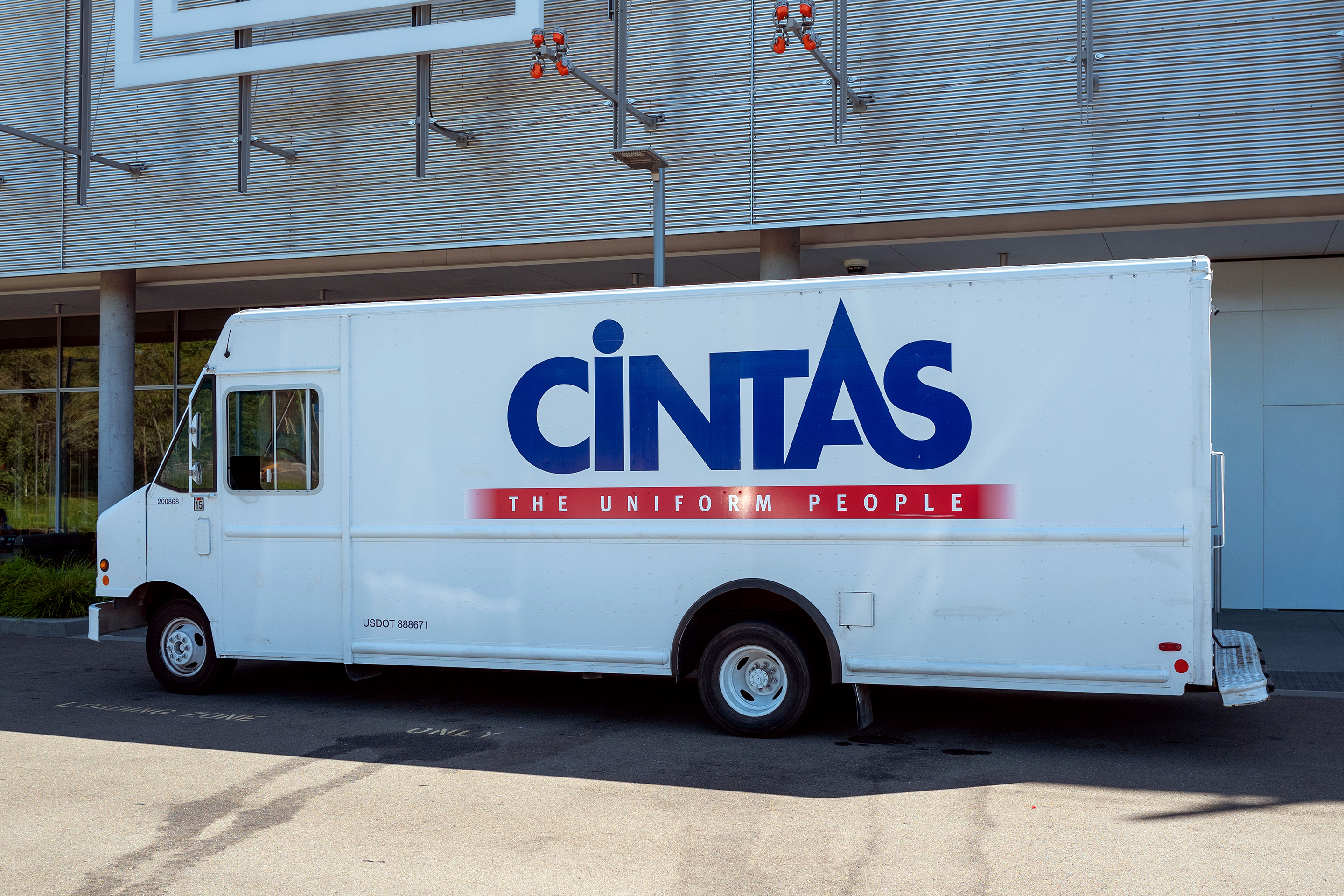
Defensive Exposure Without Consumer Dependence
Unlike consumer discretionary businesses, Cintas is not directly exposed to swings in household spending. Its demand base is tied to employment levels, regulation, and workplace continuity rather than consumer sentiment.
From a macro allocation standpoint, this creates a form of defensiveness that sits between traditional industrials and pure staples. Cintas Corp CTAS offers exposure to the services economy without relying on discretionary consumption or capital-intensive expansion cycles.
Conclusion: A Macro-Consistent Services Compounder
Cintas Corp CTAS makes macro sense heading into 2026 not because of hype or innovation narratives, but because it aligns with long-term economic realities: labor scarcity, regulatory complexity, services inflation, and corporate cost discipline.
As businesses focus on doing more with less, outsourcing non-core yet essential functions becomes rational. Cintas Corp CTAS stands at the center of that rationalization process, benefiting from trends that are unlikely to reverse in the coming economic cycle.
DISCLAIMER
This analysis of the aforementioned stock security is in no way to be construed, understood, or seen as formal, professional, or any other form of investment advice. We are simply expressing our opinions regarding a publicly traded entity.
© 2025 MacroHint.com. All rights reserved.

Michael Lazenby is the Editor-in-Chief and Founding Partner of MacroHint. He studied economics, business, and government at UT Austin and has hedge fund experience.