Keurig Dr Pepper KDP sits at the intersection of consumer trade-down behavior, at-home consumption, and late-cycle staples demand.
Keurig Dr Pepper KDP: Consumer Staples Macro Outlook
Sponsored by Lake Region – Learn more at https://www.lrsc.edu
Executive Summary: A Staples Demand and At-Home Consumption Thesis
Keurig Dr Pepper Inc (KDP) occupies a strategically resilient position in the global economy as macro conditions evolve heading into 2026. In an environment characterized by moderating growth, persistent inflation in services, and sustained pressure on household budgets, consumer behavior continues to tilt toward affordable, habitual, and at-home consumption. From a macroeconomic perspective, Keurig Dr Pepper aligns with this shift through its exposure to non-discretionary beverages and everyday consumption routines.
This is not a discretionary growth narrative tied to consumer exuberance. It is a macro-consistent staples thesis rooted in price elasticity, habitual demand, and substitution away from higher-cost out-of-home spending.
Consumer Trade-Down Dynamics Favor At-Home Consumption
One of the most reliable macro patterns during late-cycle and post-inflationary environments is consumer trade-down. As real wage growth becomes uneven and discretionary budgets tighten, households adjust where and how they consume rather than eliminating consumption altogether.
Beverages are a prime example. Consumers reduce restaurant and café visits while increasing at-home consumption of coffee, soft drinks, and ready-to-drink beverages. From a macro standpoint, Keurig Dr Pepper KDP benefits directly from this substitution effect, as its product portfolio is deeply embedded in everyday home routines.
This dynamic tends to persist even if headline inflation moderates.
Why Keurig Dr Pepper KDP Fits a Late-Cycle Consumer Environment
Late-cycle economic phases typically reward companies tied to staples demand rather than discretionary spending. While consumers may delay large purchases, they continue buying beverages that are low-cost relative to income and consumed daily.
Keurig Dr Pepper operates in a segment where demand is habitual and recurring. From a macro perspective, this reduces sensitivity to short-term economic volatility. Keurig Dr Pepper KDP therefore functions as a defensive consumer exposure without relying on luxury pricing or aspirational branding.
This makes the business particularly relevant in an economy where growth is uneven across income brackets.
Pricing Power in a Sticky Inflation Environment
Although goods inflation has cooled relative to recent peaks, input costs such as labor, logistics, and packaging remain structurally higher than pre-pandemic levels. In this environment, companies with strong brand portfolios and distribution scale are better positioned to manage margin pressure through incremental pricing actions.
From a macro lens, beverage companies benefit from relatively inelastic demand. Small price increases rarely alter consumption behavior materially. Keurig Dr Pepper KDP participates in this pricing dynamic, allowing revenue growth to keep pace with broader services and food inflation.
This pricing resilience is a key attribute as inflation normalizes at a higher structural floor.
Why Keurig Dr Pepper KDP Benefits From At-Home Consumption Trends
As services inflation remains elevated, consumers increasingly view at-home consumption as a form of informal inflation hedging. Brewing coffee at home or purchasing multi-serve beverages is materially cheaper than frequent out-of-home alternatives.
From a macroeconomic standpoint, this behavior reinforces demand for packaged beverages even during periods of slower economic growth. Keurig Dr Pepper KDP benefits from this shift, as its platform supports convenience, familiarity, and cost control for households.
This dynamic tends to be durable across economic cycles.
Distribution Scale and Supply Chain Normalization
Global supply chains have improved since their peak disruption, but costs have not fully reverted to pre-2020 levels. Companies with established distribution networks and purchasing scale are better positioned to manage volatility and protect margins.
From a macro perspective, scale functions as a stabilizer. Keurig Dr Pepper KDP operates with nationwide distribution and entrenched retail relationships, allowing it to absorb cost fluctuations more effectively than smaller competitors.
This matters as logistics and labor markets remain structurally tighter than in prior decades.
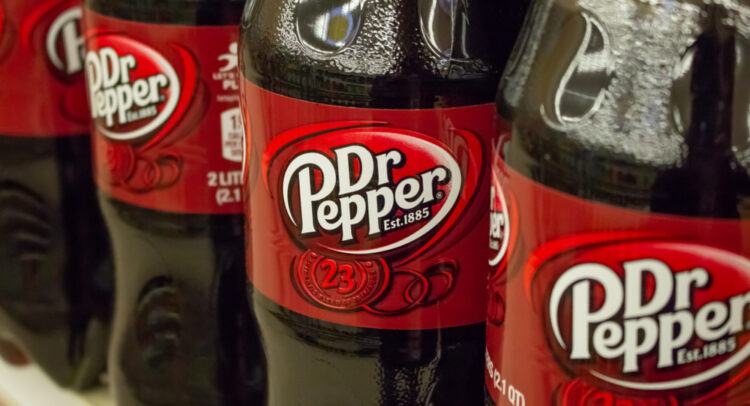
Defensive Consumer Exposure Without Income Sensitivity
Unlike discretionary brands tied to fashion, travel, or luxury goods, beverage consumption cuts across income levels. Demand remains resilient across economic conditions, making staples-oriented companies attractive during periods of uncertainty.
From a macro allocation standpoint, Keurig Dr Pepper KDP offers exposure to consumer spending without direct dependence on real income acceleration or credit expansion. This places the company in a defensively positioned segment of the consumer landscape heading into 2026.
Conclusion: A Macro-Consistent Consumer Staples Compounder
Keurig Dr Pepper KDP makes macro sense heading into 2026 not because of aggressive growth narratives, but because it aligns with enduring economic behaviors: consumer trade-down, at-home substitution, habitual demand, and pricing resilience.
As households navigate a higher-cost, slower-growth environment, consumption patterns favor affordability and routine. Keurig Dr Pepper KDP sits squarely within that reality, making it a macro-consistent exposure to consumer demand rather than consumer excess.
DISCLAIMER
This analysis of the aforementioned stock security is in no way to be construed, understood, or seen as formal, professional, or any other form of investment advice. We are simply expressing our opinions regarding a publicly traded entity.
© 2025 MacroHint.com. All rights reserved.

Michael Lazenby is the Editor-in-Chief and Founding Partner of MacroHint. He studied economics, business, and government at UT Austin and has hedge fund experience.