About Las Vegas Sands
In 1989, computer convention entrepreneur Sheldon Adelson pooled his winnings from creating an electronic tradeshow, COMDEX, and bought the Sands Hotel.
What was seen as a major risk by others was perceived by Adelson as opportunity.
Shortly after the demolition and reopening of the Sands, Adelson and his team constructed convention center adjacent to the hotel. Today, the convention center is one of the world’s largest privately owned spaces in the industry.
“If you can combine the romantic atmosphere of Venice with all of the luxuries that can only be found in Las Vegas, then it can be a winner.” This quote reportedly came from Adelson’s wife, inspiring him to bring Italy to Vegas.
This was the genesis of the creation of what we know today as The Venetian.

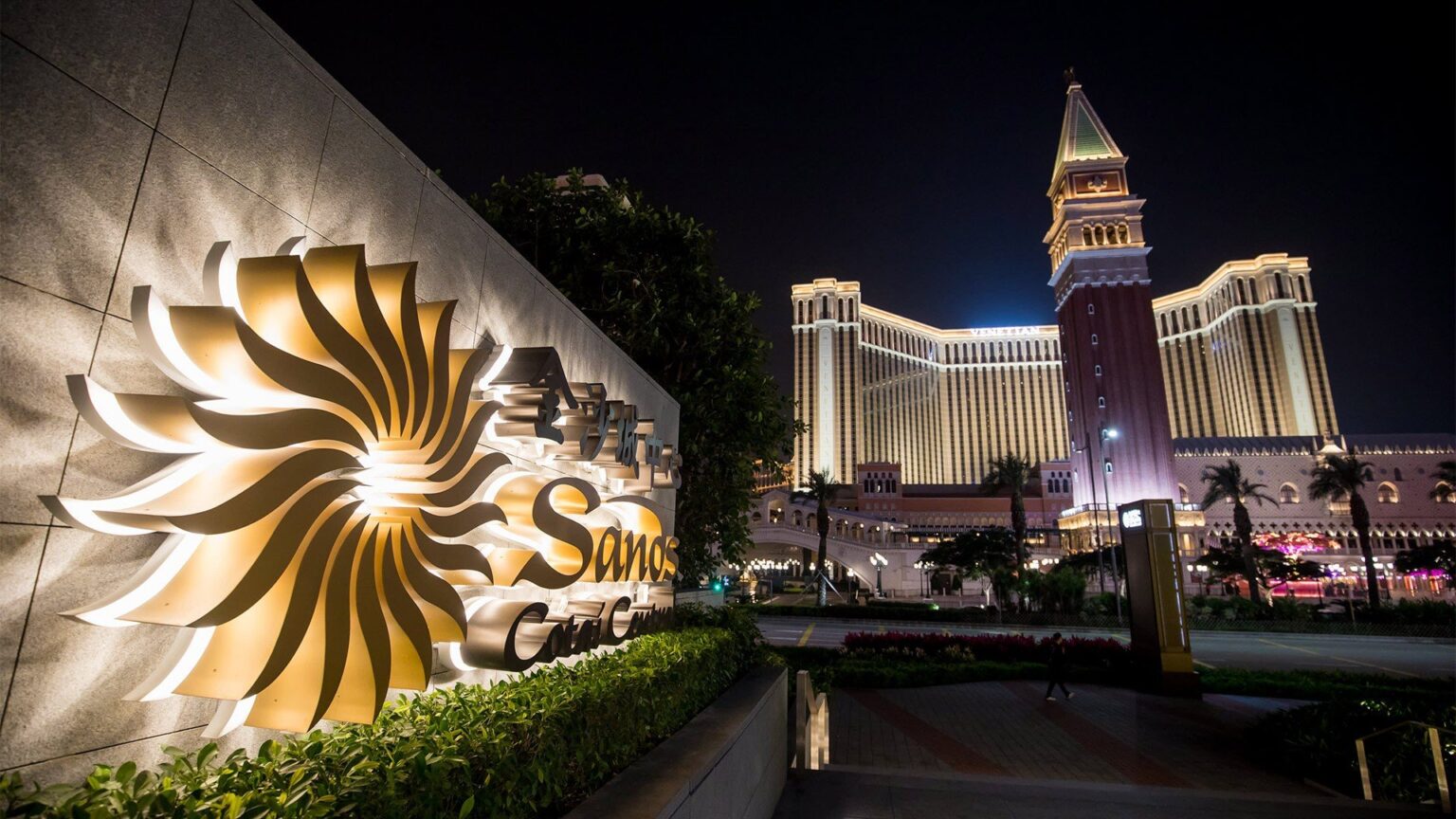
Today, Las Vegas Sands is the holder of various iconic casino, resort, and hotel properties both on The Strip (The Venetian Resort and Sands Expo and Convention Center) and on the Chinese providence of Macau as well as in Singapore.
Las Vegas Sands’ Numbers
Las Vegas Sands is currently a $28 billion company as it relates to market capitalization.
While the internet doesn’t have any price-to-earnings ratios on the company, certain sources derive an intrinsic value share price of $20.98. The company is currently trading at $37 as of 3/9/2022.
Therefore, Las Vegas Sands (NYSE: LVS) appears to be modestly overvalued which is not necessarily a significant concern as it relates to the company being grossly over or undervalued. However, our team wouldn’t buy shares in the company until overall market volatility waned and global relations, especially between the United States and China were stronger and preferably more favorable to Las Vegas Sands doing business (without many restrictions or worries) in the Far East.
If Las Vegas Sands were to lose necessary business and/or operating permits overseas, this would be a gigantic red flag for our team. However, ultimately, invest to your own accord, we are just merely expressing our views, not telling you what to do with your money.
Fundamentally, the company maintains a slightly debt-heavy balance sheet with approximately $20 billion in total assets and $18 billion in total liabilities.
However, it does appear that the company is good at keeping sufficient amounts of cash for a rainy day, which is encouraging to our analyst team.
Specifically, throughout the last four quarters, they’ve had enough cash to keep operations up during COVID-19 and its variants wreak havoc on the travel industry and greater overall economy. However, in their last reported quarter (Q3 2021), they had a relatively steep cash drop off from roughly $2 million to $1.6 million.

While the change doesn’t initially seem material, in prior quarters the company has held approximately the same amount of cash ($2 million). The company likely had to and currently has to shell out more cash to cover its operating expenses and lack of revenues.
We’ll discuss more about their cash reserves and the future financial efficacy of LVS in later sections.
Thankfully, according to the company’s income statement, their total operating expenses have remained relatively stable at $1.3 million per quarter. It is very important for Las Vegas Sands to be able to keep its total operating expenses at this level (and of course, lower if practical).
Here’s where it gets ugly.
Las Vegas Sands’ Negative Numbers
The company’s most recent quarterly net income numbers are all negative. Specifically, their net income was -$1.1 billion. The company’s total cash from operations has also been in the red, last quarter set at $186 million.
It hurts this company pretty bad when the Zoom economy is in effect!
Las Vegas Sands’ margins are in line with the industry, maintaining a slightly better (but not great) net annual profit margin modestly higher than its peers.

Given all of the previously mentioned details on the fundamentals, you might assume growth is not Sands’ current strong suit.
You’re right.
The casino and resort operator trails behind in all major growth metrics relative to its industry peers. Additionally, their financial effectiveness metrics (i.e., annual return on assets, return on equity etc…) trail behind the competition, too.
Finally, how financially strong is Las Vegas Sands?
Through some quick calculations and ratio analysis, according to TD Ameritrade’s platform, “it (Las Vegas Sands) does not earn enough from day-to-day operations to service its debt.” However, while cash from operations couldn’t fit their entire debt bill, the company does maintain enough valuable assets to cover the remaining debt.
Nonetheless, if you were to buy shares of LVS, you wouldn’t be buying it with the idea of doubling or tripling your money in a year. You’re likely buying the stock because you have the luxury of time and want to be part owner in the house that always wins.
Frankly, Las Vegas Sands isn’t as financially strong as we initially assumed.
While they seem to have adequate cash reserves (for the time being), the company and hospitality industry as a whole faces some strong, brutal headwinds which can eventually drain their cash flow to dangerous levels.
Las Vegas Sands and COVID-19
COVID-19 has rocked the stock.
It makes sense given Sands’ primary stream(s) of revenue comes from the hospitality business that the stock has been in a steady descent since March 2020.
Is this going to continue?

We don’t see LVS falling much further, however, we don’t predict a rise back to previous levels in the near future. As previously mentioned, we find the company’s stock to be around fair value at lower than current levels (mid to low $20’s).
While Las Vegas is a major source of their revenues, let’s not forget their extensive casino and resort businesses in Asia.
Las Vegas Sands’ Asia Business
During the writing of this article, Sands is in the process of renewing their gaming license in one of the largest Asian gaming markets, Macau.
While the company has seen previous success in Macau, they are currently facing uncertain and potentially indefinite legal pressure from government officials in the region. While somewhat unlikely, Sands operations could theoretically be unplugged if contention between the United States and China persists (at least, from our perspective).
If this were to happen, it would be absolutely devastating to the company and its fellow American competitors.
If things weren’t bad enough, Las Vegas Sands is also being sued for $12 billion by Macau business magnate, Marshall Hao.
Hao is alleging Sands breached a property contract. Hao has previously filed suit against the company (unsuccessfully) in Nevada courts, however, his current lawsuit is progressing through the courts of Macau.
Another major headwind for the company with $20 billion in total assets.

While it’s always practical to prepare for the worst and pray for the best, if things get icy enough in the region, Sands could lose its license to operate and be kicked out of a major, densely populated market.
On a separate and final note, we don’t feel the need to dive into the problems the company is facing with COVID-19 alone.
The near term doesn’t look great for Las Vegas Sands.
Should you buy Las Vegas Sands Stock?
Given current macroeconomic conditions and company and industry-specific headwinds, we think that if you wanted to buy Las Vegas Sands at a fair price, it’s worth waiting a while until the stock price hits the mid-20s range. Otherwise, you might be purchasing the stock at a premium that isn’t likely worth paying or that you’ll pay for with time, as it might take years (possibly) for the company’s value to catch to its relatively inflated share price.
The short term doesn’t look very promising for the casino and hotel operator, however, if the company executed a strong turnaround with the headwinds they can control (not many), there’s some reason to be bullish in the long-term for Las Vegas Sands.
However, as long as lockdowns and other mandates are in place, coupled with their somewhat bleak current cash status and foreign, geopolitical risks and conflicts, we give the company a “sell” rating.
DISCLAIMER: This analysis of the aforementioned stock security is in no way to be construed as or understood as investment advice. We are simply expressing our opinions regarding a publicly traded entity.

Michael Lazenby is the Editor-in-Chief and Founding Partner of MacroHint. He studied economics, business, and government at UT Austin and has hedge fund experience.