Executive Summary
This is not just a geopolitical event. It is a market-defining variable.
At the center of the entire situation is one key transmission mechanism:
- Oil prices
- Inflation expectations
- Interest rate direction
- Risk appetite
If the war continues or escalates, markets will behave very differently than if the conflict de-escalates or ends.
For investors, this creates a clear framework:
- War continues → inflation shock, defensive positioning
- War ends → disinflation, risk-on rally
Understanding how to position around these two scenarios is critical.
Why the U.S.–Iran War Matters for Markets
The conflict directly impacts one of the most important chokepoints in the global economy: energy supply.
The Strait of Hormuz, a key route for global oil shipments, sits at the center of the tension.
Any disruption to this region:
- Drives oil prices higher
- Increases global inflation pressure
- Forces central banks to remain restrictive
This creates a cascading effect across all asset classes.
The entire equity market reaction can be simplified into one idea:
- Higher oil → tighter financial conditions
- Lower oil → easier financial conditions
From there, sector performance follows.
Scenario 1: What to Buy If the War Continues or Escalates
If the conflict persists, markets will shift toward an inflation-driven, risk-off environment.
This scenario is defined by:
- Elevated oil prices
- Persistent inflation
- Slower economic growth
Energy Stocks: The Primary Trade
Energy is the cleanest and most direct way to express a prolonged conflict.
Oil producers benefit immediately from higher prices through:
- Increased revenue
- Expanding margins
- Strong free cash flow
Large-cap energy companies are especially well positioned because:
- They have scale
- They have low production costs
- They return capital to shareholders
In this environment, energy becomes the core allocation.
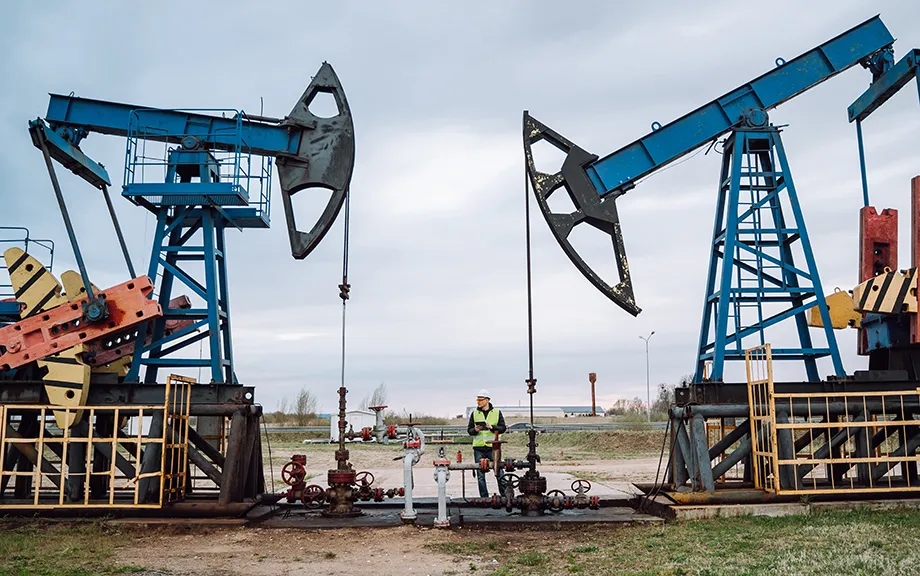
Oil Services: Leveraged Upside to Energy
Oil services companies benefit from increased capital spending across the energy sector.
When oil prices remain elevated:
- Exploration increases
- Production investment rises
- Demand for services expands
This creates a second layer of upside beyond producers.
Defense Stocks: Duration of Conflict Matters
Defense companies benefit from:
- Sustained geopolitical tension
- Increased military spending
- Replenishment of equipment and inventory
However, this is often a second-order trade.
Much of the immediate upside can be priced in quickly, making duration of the conflict the key driver.
Gold and Hard Assets: Inflation and Risk Hedge
Gold and commodity-linked equities tend to perform well during:
- Geopolitical instability
- Rising inflation expectations
They serve as:
- A hedge against uncertainty
- A store of value during market stress
What Underperforms in This Scenario
Certain sectors are structurally disadvantaged if the war continues:
- Airlines, due to rising fuel costs
- Rate-sensitive growth stocks, due to persistent inflation
- Industrials with high input cost exposure
These areas face margin pressure and valuation compression.
Scenario 2: What to Buy If the War De-Escalates or Ends
If tensions ease, markets will shift rapidly into a risk-on environment.
This scenario is defined by:
- Falling oil prices
- Lower inflation expectations
- Improved growth outlook
Technology and AI: The Primary Beneficiary
Technology stocks benefit the most from:
- Falling interest rates
- Improved liquidity
- Renewed risk appetite
Companies tied to artificial intelligence and cloud infrastructure are particularly sensitive to this shift.
As financial conditions ease:
- Valuations expand
- Capital flows return
- Growth expectations increase
This becomes the strongest upside trade in a de-escalation scenario.
Cyclicals and Industrials: Growth Reacceleration
Cyclical sectors benefit from:
- Improving economic expectations
- Increased capital spending
- Stronger global demand
Industrials, machinery, and equipment companies tend to move higher as:
- Growth fears fade
- Investment activity resumes
Airlines and Travel: Highest Sensitivity to Oil
Airlines are one of the most oil-sensitive industries in the market.
If oil prices decline:
- Fuel costs drop significantly
- Margins expand rapidly
- Earnings expectations improve
This makes airlines one of the highest-beta trades in a peace scenario.

Small Caps and Rate-Sensitive Assets
Smaller companies and rate-sensitive sectors benefit from:
- Lower borrowing costs
- Improved financial conditions
These areas often outperform during early stages of risk-on rotations.
What Underperforms in This Scenario
If the war ends, the following areas tend to weaken:
- Energy stocks, as oil prices decline
- Defense stocks, as urgency fades
- Defensive sectors, as risk appetite returns
The Real Strategy: Positioning in an Uncertain Environment
The most important reality is that markets do not wait for certainty.
They move based on expectations.
Right now, the outcome of the U.S.–Iran conflict is not fully priced in either direction.
This creates an opportunity for a balanced approach.
A barbell strategy allows investors to participate in both scenarios:
- Energy exposure as a hedge against escalation
- Technology exposure as a bet on de-escalation
This approach reduces directional risk while maintaining upside potential.
Key Indicators to Watch
Investors should focus on a few critical signals:
- Movement in oil prices
- Developments around the Strait of Hormuz
- Headlines related to ceasefire or negotiations
- Inflation expectations and interest rate shifts
These indicators will determine which scenario is playing out.
Final Verdict: A Market Driven by One Variable
The U.S.–Iran conflict is currently shaping global markets through a single dominant factor: energy prices.
From that, everything else follows.
If the war continues:
- Energy and defensive assets outperform
If the war ends:
- Technology and cyclicals lead a broad rally
This is not a typical market environment.
It is a macro-driven setup where positioning around outcomes matters more than individual stock selection.
LRSC Sponsor Note
This article is brought to you in part by Lake Region State College. As global markets and industries become increasingly complex, institutions like LRSC provide practical, career-focused education in business, technology, and aviation. Their programs are designed to prepare students for real-world decision-making in dynamic environments.
Disclaimer
This article is for informational and educational purposes only and does not constitute investment advice. The views expressed are based on publicly available information and reasonable assumptions at the time of writing. Market conditions can change rapidly, especially during geopolitical events. Investors should conduct their own due diligence and consult with a qualified financial advisor before making any investment decisions.