Walmart Becomes First Retailer to Reach $1 Trillion Value
Sponsored by Lake Region State College
(Your future in business, finance, and tech begins at Lake Region.)
Overview: A Historic Milestone in Retail and Markets
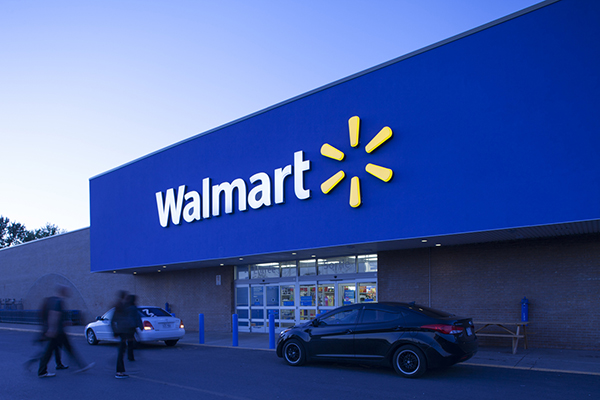
Walmart has officially become the first traditional retailer in history to reach a $1 trillion market valuation, a milestone previously reserved for mega-cap tech firms such as Nvidia and Alphabet.
The moment marks a defining shift in how Wall Street views retailers—and it cements Walmart’s transformation from a brick-and-mortar superstore into one of America’s most sophisticated technology-driven consumer ecosystems.
Walmart’s stock jumped more than 3% on Tuesday, pushing it into the trillion-dollar club during chief executive John Furner’s first week in the role.
Why Walmart Hit $1 Trillion: The Real Drivers Behind the Surge
1. E-Commerce Growth at a Scale Never Seen in Retail
Walmart’s U.S. e-commerce sales rose 28% in the three months ending 31 October, powered by:
-
Faster delivery infrastructure
-
A massive online grocery operation
-
A growing third-party marketplace
-
Rapid growth in high-margin digital advertising
This positions Walmart as the only traditional retailer meaningfully competing with Amazon in logistics, online grocery, and last-mile delivery—though Amazon still sits at roughly $2.6 trillion in market value.
2. AI Adoption That Wall Street Actually Believes In
Investors have embraced Walmart’s aggressive AI strategy, which includes:
-
Algorithmic inventory management
-
Predictive restocking
-
Automated fulfillment centers
-
Personalized online recommendations
-
Operational cost reductions across stores
Walmart’s partnership with OpenAI—announced in October—allows customers to plan meals, restock essentials, or discover products through AI-powered chat experiences. This is the type of tech integration that gives Walmart recurring, high-margin digital revenue streams far beyond retail.
3. A Perfect Macro Setup: Inflation, Trade-Down, and Tariffs
Walmart thrives when American consumers look for value. In 2025–2026, that trend is accelerating:
-
Inflation has persisted longer than expected.
-
Higher-income shoppers are trading down to Walmart for groceries and essentials.
-
The labor market has cooled, pushing households to look for lower prices.
Tariffs imposed under President Donald Trump did increase costs for electronics and toys—but Walmart’s scale has allowed it to absorb and deflect those pressures better than rivals.
“Walmart is better insulated than just about anybody given the value proposition we have,” CFO John David Rainey said after the company’s November earnings release.
4. Strong Performance Across Core Segments
Walmart’s most recent quarter showed broad-based strength:
-
Grocery
-
Apparel
-
Home essentials
-
Advertising
-
Membership programs
This diversification—combined with omnichannel efficiency—creates the kind of consistency that mega-cap investors love.
5. A New Exchange, A New Identity
In late 2025, Walmart shifted its stock listing from the New York Stock Exchange to the tech-heavy Nasdaq. Symbolically and practically, that move positioned Walmart alongside tech-forward innovators rather than legacy retailers.
Why This Moment Matters: Retail Is No Longer “Old Economy”
Walmart’s $1 trillion valuation does two things:
-
Redefines retail as a tech-enabled sector
No longer is retail dismissed as low-margin, slow-growing, and brick-bound. Walmart’s digital reinvention shows that scale + data + efficiency = a tech-like multiple. -
Signals where the next decade of consumer behavior is headed
-
AI-driven shopping
-
Same-day fulfillment as the standard
-
Value as the dominant economic theme
-
Massive consolidation around a few retail giants
-
It also raises the competitive bar for every legacy retailer still operating like it’s 2012.
Who Else Has Hit $1 Trillion?
While Walmart is the first traditional retailer to reach this level, the broader club still belongs mostly to tech:
-
Apple
-
Microsoft
-
Nvidia
-
Alphabet
-
Amazon
Berkshire Hathaway became a $1T company in 2024, and drug-maker Eli Lilly and Company crossed and then fell back below the threshold in late 2025.
Walmart’s entry signals that tech isn’t the only path to trillion-dollar relevance.
The Bottom Line
Walmart’s rise to $1 trillion is more than a headline—it’s a symbol of how retail has evolved. Powered by AI, logistics, and an unmatched understanding of value-driven American consumers, Walmart now sits comfortably among the world’s most influential corporations.
The company that once defined “big box” retail has reinvented itself as one of the most powerful technology-enabled businesses in the world.
Disclaimer
This article is for informational and educational purposes only. It is not financial advice. Market values, figures, and company details reflect publicly available information as of February 2026. Always conduct independent research or consult a financial professional before making investment decisions.

Michael Lazenby is the Editor-in-Chief and Founding Partner of MacroHint. He studied economics, business, and government at UT Austin and has hedge fund experience.